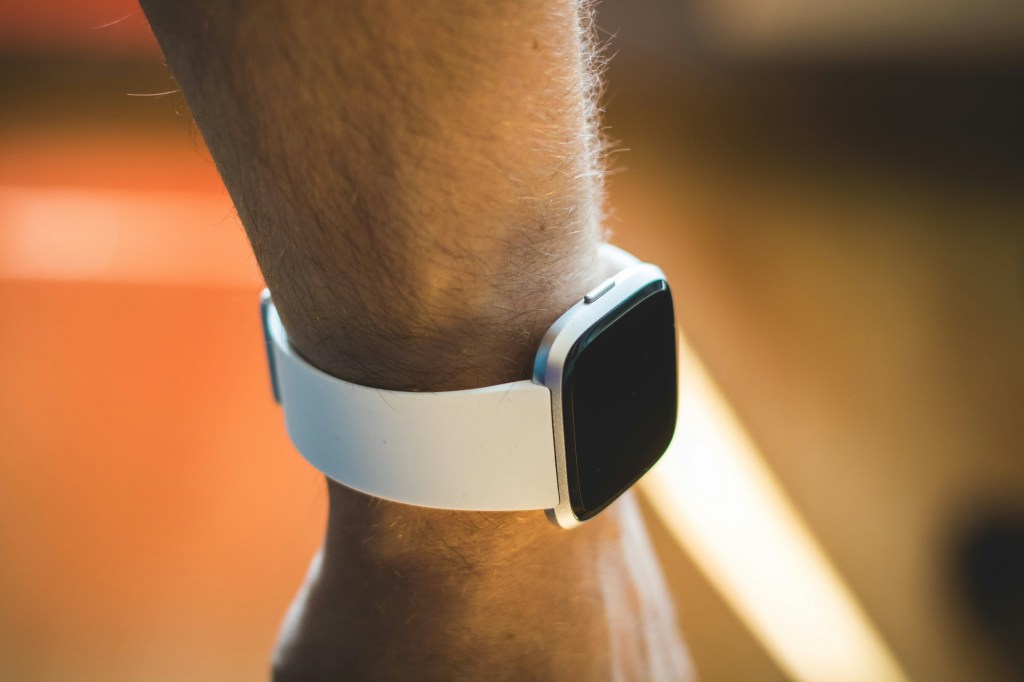
Shortly after I got my first Fit Bit, my perspective on exercise changed.
Suddenly I didn’t just want to go for a walk, I wanted to know how far I went and how many steps I got. I wanted praise for moving, proof and positive reinforcement.
I still get excited about the little badges they give you—I just earned my Earth badge, meaning I’ve taken enough steps to walk around the planet (please hold your applause.)—they make me feel like I’m getting something extra out of the exercise—you know, besides improved health and mental well-being.
If I go out on a hike and realize my FitBit is dead, I’m bummed that there will be “no record” of it, and I used to pay close attention to the “step standings” among my friends, hopeful to reach the top spot, if only so someone would say, “you got a lot of steps this week!!”
One year, I even set a goal to achieve what I called “The Perfect Fit Bit Week” which is where I got 10,000 steps each day, alongside satisfying all other fitness milestones, including moving enough each hour, getting my heart rate up, and burning enough calories.
While FitBit (and other fitness trackers alike) have encouraged in me a desire to exercise—to hit those milestones and fill those circles—it also instilled in me a belief I’ve been trying to unlearn: that if I’m not wearing it during an exercise, it doesn’t count.
And I think this mindset goes hand in hand with social media, with feeling like we need to get out and do things solely so we can post about them.
I remember a few years ago I watched a girl do a small painting each day based on a Taylor Swift song. It was a creative project that sparked inspiration in me—especially because of the attention it got her on social media—and I found myself wanting to find one similar.
But recently I’ve wondered, did the project, initially conceived in the privacy of her own home, lose any of its luster once she started posting it? Her videos got a lot of views—more and more as she went on—but is that what kept her going? Would she have continued to paint even if the videos got no views? Would she have finished the project even if she never posted it on social media? Or was that the driving force behind it?
Obviously, these kinds of videos are a huge source of our entertainment these days. We watch videos of people doing their makeup, remodeling their house, doing trick shots, and rewatching television shows. It’s fun to see what people come up with, and it’s even more fun to feel “in the know”—to feel involved, even if from afar.
It should also be said that there are careers to be found in posting these videos—success stories that started with people posting “one silly video” that eventually led them somewhere they never could have imagined.
So while I’m not criticizing this kind of content, or trying to discourage the posting of it, I can’t help but wonder where we are crossing the line that stands between creating for creating’s sake, and for content’s sake. Where is the genuine pursuit of creativity—of fun!—being lost and where is it staying true to itself?
Where are we buying into the belief that it won’t count if there’s no record of it?
Because it will.
Even if no one else knows about it.
Even if we weren’t wearing our FitBit.
And while “likes” and “views” can feel like the currency of our days, it is one that will eventually lose value, or perhaps just get more expensive. But if we can relearn to do things just for the fun of it—just for ourselves—we can reclaim “the point”, the reason why we create, why we exercise, why we try and retry new things.
That walk around the block counts. That tiny, silly hobby counts. That trip you took and forgot to take a single picture counts. It all counts when we focus on the feeling rather than the fanfare. When we do it for the peace rather than the proof.






 Kimberlee K.
Leave a comment